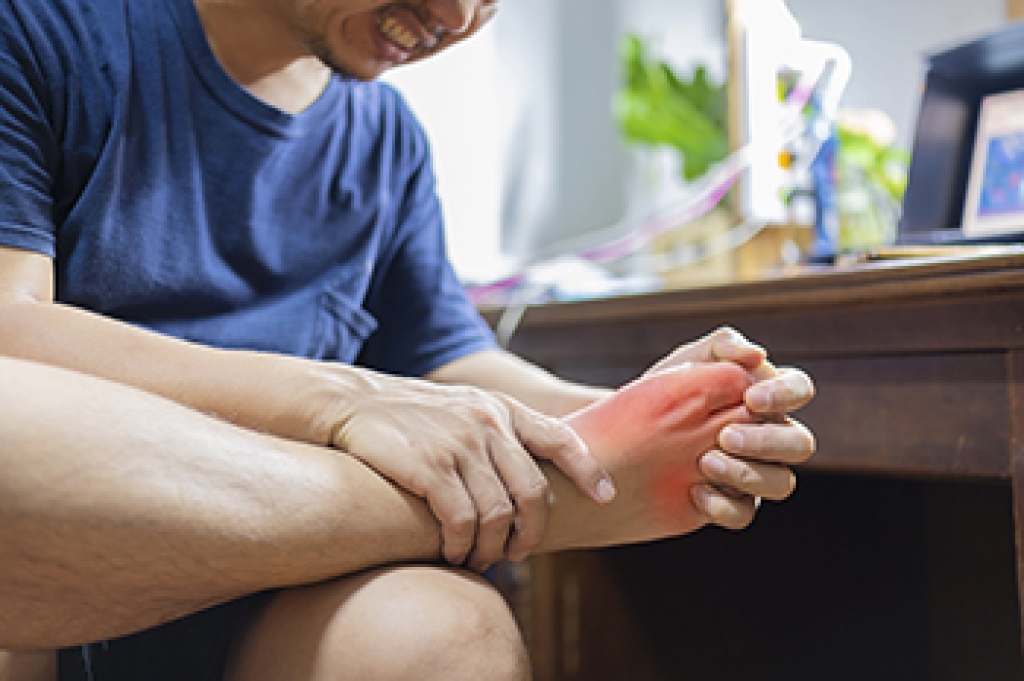
Dealing With the Pain of Gout

Gout is a form of arthritis that causes sudden, intense joint pain that can make even light pressure difficult to tolerate. It develops when tiny crystals made of uric acid collect inside a joint and trigger inflammation. Gout most often affects the base of the big toe, but it also affects the midfoot, ankle, or other joints in the foot. Uric acid is a substance that the kidneys usually remove from the body. When too much uric acid builds up, crystals form and irritate the joint. An attack usually begins without warning. The affected joint becomes swollen, red, warm, and extremely painful. As the swelling improves, the skin around the joint sometimes begins to peel.

Several factors increase the risk of developing gout. The kidneys play an important role because they remove uric acid from the bloodstream. When they do not remove enough, uric acid levels rise and crystals develop. Risk factors include being overweight, drinking large amounts of alcohol, and eating excessive amounts of foods high in purines. Purines are natural substances that break down into uric acid. Certain medicines also raise uric acid levels. After one attack, many patients experience additional flare-ups. These attacks become more frequent and affect more than one joint. Repeated inflammation can damage joints and make walking more difficult.

A podiatrist can diagnose gout by reviewing your symptoms, examining the affected foot, and ordering imaging studies or laboratory testing when appropriate. Early diagnosis helps distinguish gout from infections, fractures, or other forms of arthritis. Treatment focuses on reducing pain, controlling inflammation, and protecting the affected joint. A podiatrist also monitors changes in the foot and recommends better foot support to reduce stress on painful joints. Prompt care improves mobility and reduces the risk of lasting joint problems. If you have symptoms of gout, it is suggested that you promptly schedule an appointment with a podiatrist for effective relief and treatment solutions.

Gout is a foot condition that requires certain treatment and care. If you are seeking treatment, contact one of our podiatrists from Whitestone Podiatry PC. Our doctors will treat your foot and ankle needs.

What Is Gout?

Gout is a type of arthritis caused by a buildup of uric acid in the bloodstream. It often develops in the foot, especially the big toe area, although it can manifest in other parts of the body as well. Gout can make walking and standing very painful and is especially common in diabetics and the obese.

People typically get gout because of a poor diet. Genetic predisposition is also a factor. The children of parents who have had gout frequently have a chance of developing it themselves.

Gout can easily be identified by redness and inflammation of the big toe and the surrounding areas of the foot. Other symptoms include extreme fatigue, joint pain, and running high fevers. Sometimes corticosteroid drugs can be prescribed to treat gout, but the best way to combat this disease is to get more exercise and eat a better diet.

If you have any questions, please feel free to contact our office located in Whitestone, NY . We offer the newest diagnostic and treatment technologies for all your foot care needs.

Read more about Everything You Need to Know About Gout

Flat Foot Surgery and Restoring Arch Support

Flat feet, also known as fallen arches, occur when the arch of the foot collapses and the entire sole makes contact with the ground. This condition can appear from childhood or develop due to various factors. Flat foot surgery is a procedure designed to correct this issue by reconstructing the structure of the foot and creating a supportive arch. The goal is to improve alignment, reduce pain, and restore proper function. Understanding the condition and surgical options can help individuals make informed decisions about their care.

Symptoms of flat feet may include foot pain, swelling along the inside of the ankle, and difficulty standing or walking for extended periods of time. Some individuals experience fatigue in the feet or legs due to improper weight distribution. Causes of flat feet can include genetics, trauma, or medical conditions like diabetes that affect nerve function and tissue health. The lack of arch support can place strain on muscles and ligaments, leading to discomfort and reduced mobility. These symptoms may worsen without proper treatment.


Flat foot surgery is typically recommended when conservative treatments do not provide relief. The procedure involves reconstructing the foot to create a stable and supportive arch. This may include repairing tendons, repositioning bones, or using implants to support the structure. The exact approach depends on the severity of the condition and the underlying cause. Risk factors for this type of foot surgery include poor overall health, smoking, and conditions that affect healing, such as diabetes.


Recovery from flat foot surgery requires time, rest, and guided rehabilitation to restore strength and flexibility. Supportive footwear and follow-up care are essential for long-term success. Addressing flat feet can improve comfort, mobility, and overall quality of life. If you have flat feet and are considering surgery, it is suggested that you consult a podiatrist who can determine if this type of foot surgery is right for you.

Foot surgery is sometimes necessary to treat a foot ailment. To learn more, contact one of our podiatrists of Whitestone Podiatry PC. Our doctors will assist you with all of your foot and ankle needs.

When Is Surgery Necessary?

Foot and ankle surgery is generally reserved for cases in which less invasive, conservative procedures have failed to alleviate the problem. Some of the cases in which surgery may be necessary include:

  • Removing foot deformities like bunions and bone spurs
  • Severe arthritis that has caused bone issues
  • Cosmetic reconstruction

What Types of Surgery Are There?

The type of surgery you receive will depend on the nature of the problem you have. Some of the possible surgeries include:

  • Bunionectomy for painful bunions
  • Surgical fusion for realignment of bones
  • Neuropathy decompression surgery to treat nerve damage

Benefits of Surgery

Although surgery is usually a last resort, it can provide more complete pain relief compared to non-surgical methods and may allow you to finally resume full activity.

Surgical techniques have also become increasingly sophisticated. Techniques like endoscopic surgery allow for smaller incisions and faster recovery times.

If you have any questions, please feel free to contact our office located in Whitestone, NY . We offer the newest diagnostic and treatment technologies for all your foot care needs.
Read more about Foot Surgery

Connect With Us

scroll to top